
Analysis of the Impact of Interest Rates on Credit Accessibility in the USA
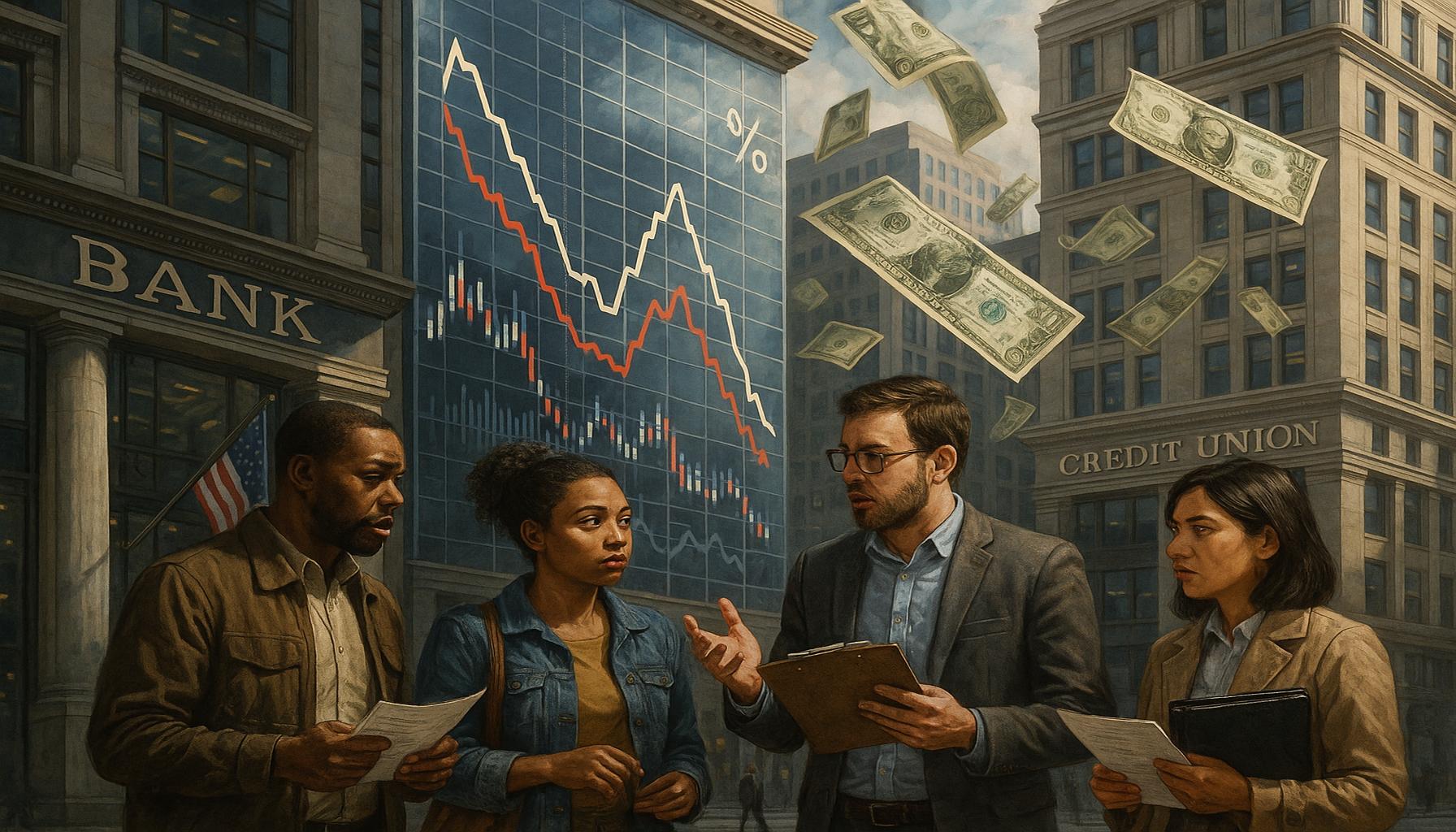
Examining the Impact of Interest Rates on Credit Markets
Understanding the relationship between interest rates and credit accessibility is crucial for consumers and businesses alike. In today’s fluctuating economic landscape, interest rates play a pivotal role in determining who can secure loans and credit. As rates rise or fall, they influence individual financial choices and the broader lending environment, significantly impacting lifestyle and economic growth.
Numerous factors illustrate how interest rates directly affect credit accessibility:
- Loan Approval Rates: Higher interest rates typically lead to tighter lending standards. Financial institutions become more cautious, particularly concerning borrowers with lower credit scores. For instance, if the Federal Reserve raises rates by a quarter-point, lenders may view potential borrowers with less-than-ideal credit histories as higher risk. Consequently, such individuals may find it more challenging to secure loans, like mortgages or personal credit, stunting their economic mobility.
- Monthly Payments: Increased interest rates also translate to higher monthly payments on borrowed amounts. A change as small as 1% can elevate repayments significantly over the life of a loan. For example, a $200,000 mortgage at a 4% interest rate results in monthly payments around $955, whereas at 5%, that jumps to approximately $1,073. This disparity can deter consumers from pursuing loans, potentially cooling down the housing market and reducing consumer spending.
- Consumer Behavior: On the flip side, when rates are low, borrowing is encouraged. Consumers are more likely to take advantage of favorable terms, leading to increased economic activity. Businesses also feel more inclined to invest in capital improvements or expand their operations, as the cost of financing is reduced. The surge in car purchases and home refinances seen during the periods of historically low-interest rates from 2020 to 2021 serves as a prime example of this trend.
According to the Federal Reserve, even minor shifts in interest rates can substantially impact the borrowing capacity of millions of Americans. This ripple effect can reshape entire economic sectors, affecting everything from personal loans to large business investments. For instance, small businesses looking to expand often depend on loans that become less accessible as interest rates climb, stunting their potential growth and job creation.
Diving deeper into this analysis reveals the necessity of understanding how various economic conditions influence interest rates and, subsequently, the accessibility of credit across the United States. Inflationary pressures, government monetary policies, and global economic events all play a role in shaping these rates, making it imperative for individuals and businesses to stay informed about these dynamics. This knowledge equips them to make calculated financial decisions, ultimately enhancing their financial resilience in an ever-changing economic landscape.
DISCOVER MORE: Click here to learn how to safeguard your business
The Dynamics of Interest Rates and Credit Demand
The connection between interest rates and credit accessibility serves as a compass reshaping consumer and business behaviors in the United States. As interest rates fluctuate, they create ripples throughout the credit markets, influencing many crucial aspects of borrowing and lending. The interplay of these rates can lead to opportunities or roadblocks for potential borrowers, thereby altering the financial landscape.
One of the most significant consequences of changing interest rates is their impact on borrower eligibility. When interest rates rise, lenders become increasingly risk-averse. They often tighten their underwriting standards, making it challenging for less-than-perfect credit borrowers to qualify for loans. A notable statistic highlights this trend: a 10% increase in interest rates can result in an approximately 20% decrease in loan approval rates among applicants with lower credit scores. This underscores the difficulties these borrowers face, as they may find themselves excluded from potential financing opportunities, limiting their economic advancement.
Moreover, the effects of interest rates stretch beyond loan approval. Monthly payment obligations represent a crucial aspect of borrowing that can significantly deter consumer engagement. As borrowing costs rise, monthly payment structures become less attractive. For example, consider a common scenario where a borrower takes out a $300,000 mortgage. At an interest rate of 3.5%, their monthly payments would hover around $1,347. However, at 5%, those payments surge to approximately $1,610. This roughly $263 difference in monthly outlay can lead many potential homebuyers to reconsider their decisions, stifling housing market activity and influencing overall economic growth.
Additionally, rising interest rates can have a profound impact on consumer behavior regarding discretionary spending. As the cost of borrowing escalates, consumers tend to postpone significant purchases or investments, such as homes, vehicles, or business expansions. Historical evidence illustrates this phenomenon—during periods of heightened interest rates, credit card debt typically decreases, with many individuals choosing to save rather than spend. These shifts impact economic sectors, influencing everything from retail sales to home construction.
- Homeownership Rates: Higher interest rates often lead to lower homeownership rates, as many first-time buyers withdraw from the market, unable to manage increased monthly payments.
- Small Business Investments: As business loans become more expensive, small businesses may delay hiring new employees or investing in future projects, stifling job creation.
- Consumer Confidence: Elevated rates may lead consumers to exhibit caution in their spending, impacting overall consumer confidence and economic stability.
The critical examination of these dynamics emphasizes the importance of understanding interest rates and their influence on credit accessibility in the evolving financial landscape of the United States. Recognizing these patterns can empower consumers and businesses alike to navigate the complexities of borrowing, allowing them to make strategic decisions in alignment with economic realities.
DISCOVER MORE: Click here to learn about asset diversification strategies
The Ripple Effects of Interest Rates on Economic Sectors
As interest rates ascend, their influence seeps into various economic sectors, underscoring the interconnectedness of financial systems. Each increment, while seemingly small, sets off a chain reaction that affects consumers, businesses, and ultimately the broader economy. From the housing market to consumer spending, understanding these ramifications can equip stakeholders to better navigate impending rate changes.
In the realm of real estate, rising interest rates can stymie the purchasing power of potential homeowners. A recent study revealed that for every percentage point increase in mortgage rates, the purchasing power of buyers decreases by approximately 10% to 15%. This limitation constricted demand in the housing market, leading to stagnation in home prices, which can then ripple through related sectors such as home improvement and retail. The hesitance from first-time buyers, often apprehensive about future financial burdens, can dilute the momentum of the housing market and curtail overall economic growth.
Moreover, the automotive industry, heavily reliant on financing, experiences similar challenges. Rising interest rates typically translate to higher monthly payments for auto loans, prompting consumers to rethink their plans for vehicle purchases. Data shows that an average increase of just 1% in interest rates can result in a decline of 8% to 10% in new vehicle sales. As a direct consequence, auto manufacturers may face declining revenues, ultimately leading to reduced production outputs and potential layoffs, which would further impact consumer confidence and spending habits.
When examining the landscape of small businesses, the correlation between interest rates and access to credit becomes even more pronounced. Many small business operators rely on loans to manage cash flow, invest in new projects, and make essential hires. The National Federation of Independent Business reported that nearly 30% of small businesses cite securing adequate financing as their top concern. As interest rates rise, lenders become increasingly stringent, with many opting to reduce the amount or availability of credit, thus inhibiting growth ambitions. Consequently, the adverse effects can cycle back into the economy through reduced employment rates and slower innovation.
- Investment Decisions: As borrowing costs increase, businesses may pull back on capital expenditures, hampering long-term economic expansion and increasing reliance on outdated equipment or practices.
- Housing Market Effects: The shift in demand impacts real estate agents, builders, and associated sectors. A sluggish housing market may translate to decreased job opportunities, creating a negative employment loop.
- Financial Services Shift: Financial institutions may adapt their offerings, introducing more competitive prices or alternative products to attract borrowers, reflecting the evolving dynamics of supply and demand.
Consumer psychology also plays a pivotal role in this dialogue. As households witness increasing interest rates, emotions of uncertainty may compel them to tighten their budgets—prioritizing savings over expenditure. Those with existing debts might focus on repayment strategies, further constraining consumer spending and creating a feedback loop of economic caution. Analysts often note that as rates rise, consumer sentiment indexes decline, suggesting that fear of economic slowdown can manifest as reduced consumption.
This expansion of insights into how interest rates interweave with the credit landscape reveals the intricate web of implications for the American economy. Armed with this knowledge, consumers and businesses alike can prepare for shifts in accessibility and adapt accordingly in challenging times.
DISCOVER MORE: Click here to learn how small businesses can thrive online
Final Thoughts on Credit Accessibility and Interest Rates
As we delve into the intricate relationship between interest rates and credit accessibility in the United States, it becomes evident that the implications extend far beyond simple borrowing costs. The ramifications of rising rates are profound, affecting not only consumer behaviors but also shaping the financial landscape for businesses and the overall economy. With each incremental rise, the challenges faced by individuals seeking mortgages, families considering new vehicles, and small businesses aiming for growth become increasingly complex.
The tightening of credit accessibility exacerbates economic pressures, often resulting in diminished purchasing power and a lull in consumer confidence. For instance, first-time homebuyers facing steeper mortgage rates may retreat from the housing market, leading to a slowdown that reverberates throughout related industries. Similarly, small businesses—often seen as the backbone of local economies—can find themselves stifled by a lack of funding, which has the cascading effect of hampering innovation and job creation.
Moreover, as interest rates exert their influence, financial institutions are compelled to adapt, potentially altering their lending practices and product offerings to maintain competitiveness. This dynamic environment necessitates that consumers remain vigilant and informed, actively seeking ways to optimize their financial strategies amidst fluctuating prices.
In conclusion, understanding the multifaceted impacts of interest rates on credit accessibility fosters a greater awareness of the larger economic ecosystem in which we operate. For policymakers, businesses, and consumers alike, the challenge lies in navigating these shifts with foresight and adaptability. With ongoing fluctuations in interest rates, staying educated on financial decisions is critical, presenting opportunities for those equipped to respond. As we move forward, the economic landscape demands not just reactionary measures but proactive approaches that can harness the full potential of our financial systems.
Related posts:
Analysis of the Labor Market and Its Implications for the American Economy in 2023
The impact of the global economy on Finnish financial markets
The Revolution of Decentralized Finance: Perspectives for the US Financial Market
How to Create an Emergency Fund While Living in Finland
Analysis of the Real Estate Market Post-Pandemic and Its Economic Implications
Marketing Strategies to Differentiate Your Business in a Competitive Market

Linda Carter is a writer and financial expert specializing in personal finance and financial planning. With extensive experience helping individuals achieve financial stability and make informed decisions, Linda shares her knowledge on the our platform. Her goal is to empower readers with practical advice and strategies for financial success.